
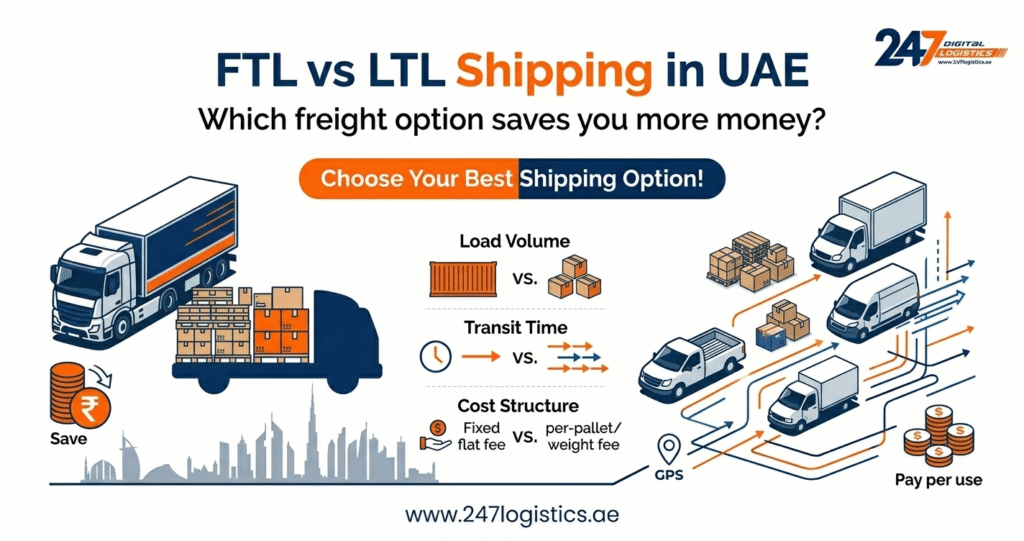
Efficient freight management is crucial for businesses operating in the UAE’s dynamic logistics market. As trade volumes grow, companies are increasingly evaluating shipping options to optimize costs, reduce delivery times, and improve supply chain efficiency. Two of the most commonly discussed methods are Full Truckload (FTL) shipping and Less-than-Truckload (LTL) shipping. Understanding the differences between FTL vs LTL shipping in UAE is essential for businesses seeking to balance speed, reliability, and cost-effectiveness.
FTL shipping involves dedicating an entire truck to a single shipment. This option is ideal for businesses with large volumes of cargo, urgent deliveries, or high-value goods. LTL shipping, on the other hand, combines multiple smaller shipments from different customers into one truck. LTL is best suited for smaller shipments or businesses looking to save on transport costs without needing the entire truck’s capacity.
1. Understanding FTL Shipping in UAE
FTL (Full Truckload) shipping provides a dedicated vehicle for a single shipment. The truck moves directly from the origin to the destination without making stops to pick up or deliver other cargo.
Key benefits of FTL shipping:
- Faster Transit: No multiple stops ensure quicker delivery.
- Reduced Risk: Cargo is handled less, minimizing the chance of damage.
- Ideal for Large Volumes: Perfect for full-truck shipments exceeding standard capacity.
- Predictable Scheduling: Delivery schedules are more precise, which helps businesses plan inventory and supply chain operations effectively.
FTL is particularly suitable for industries such as manufacturing, retail, e-commerce, and construction, where timely delivery of large quantities is critical. For businesses shipping high-value or fragile goods, the dedicated vehicle in FTL shipping ensures better security and fewer handling-related damages.
2. Understanding LTL Shipping in UAE
LTL (Less-than-Truckload) shipping consolidates multiple smaller shipments from various businesses into a single truck. Each customer pays only for the space their cargo occupies.
Key benefits of LTL shipping:
- Cost Efficiency: Sharing the truck space reduces transportation costs for small shipments.
- Flexibility: Suitable for businesses that do not have enough cargo to fill a full truck.
- Environmentally Friendly: Consolidating shipments reduces fuel consumption per shipment.
- Variety of Services: Many LTL providers offer optional services like tracking, insurance, and express delivery.
While LTL shipping is slower than FTL due to multiple pickups and deliveries, it is an excellent choice for businesses with smaller shipments looking to save on costs. By combining shipments, companies avoid paying for unused truck space, making LTL a financially efficient option.
3. Comparing Costs: FTL vs LTL Shipping in UAE
Cost is often the decisive factor for businesses when choosing between FTL vs LTL shipping in UAE.
- FTL Shipping Costs: Typically higher because the entire truck is dedicated to one shipment. Pricing depends on distance, truck size, and shipment weight. The higher cost is offset by faster delivery, reduced handling, and lower risk of damage.
- LTL Shipping Costs: Generally lower, as customers share truck space. Pricing is based on cargo volume, weight, and the number of stops. While cost-effective, delivery time may increase due to multiple stops and handling, which can affect time-sensitive shipments.
Businesses must evaluate their priorities. If speed, security, and full-volume shipments are critical, FTL shipping may justify the higher cost. If minimizing transportation expenses for smaller shipments is the priority, LTL shipping is often the better choice.
4. Delivery Speed and Reliability
When considering FTL vs LTL shipping in UAE, delivery speed and reliability play significant roles:
- FTL Shipping: Offers direct routes and predictable delivery schedules. The absence of stops reduces transit time and minimizes the risk of delays.
- LTL Shipping: Multiple stops can extend delivery time and increase the chances of minor delays. Reliability is strong for well-organized LTL providers, but businesses must account for potential variations in delivery times.
Companies in sectors like e-commerce, food & beverage, and healthcare may prefer FTL shipping for urgent or sensitive shipments. LTL shipping remains suitable for businesses that prioritize cost savings over speed.
5. Cargo Size and Volume Considerations
The size and volume of shipments significantly influence the choice between FTL and LTL:
- FTL Shipping: Best for large shipments that require the full truck’s capacity. Businesses with bulk shipments or recurring large orders benefit from FTL efficiency.
- LTL Shipping: Designed for smaller cargo that cannot fill an entire truck. Ideal for SMEs, startups, or businesses with variable shipment volumes.
Understanding shipment volume ensures the right freight choice, optimizing both costs and delivery efficiency.
6. Safety and Handling
Safety and cargo handling are critical considerations for businesses shipping valuable or fragile goods:
- FTL Shipping: Fewer handling points reduce the risk of damage or loss. Cargo remains on the same truck from origin to destination.
- LTL Shipping: Multiple handling points increase exposure to potential damage. However, modern LTL providers offer protective measures, such as palletization, secure loading, and insurance options.
For fragile or high-value shipments, FTL shipping is generally safer, while LTL works well for standard goods with lower risk.
7. Choosing the Right Option for Your Business
Choosing between FTL and LTL depends on your business needs, shipment volume, budget, and delivery timelines. Consider these factors:
- Shipment Size: Large shipments lean toward FTL, small shipments toward LTL.
- Urgency: Time-sensitive shipments benefit from FTL’s direct delivery.
- Cost Sensitivity: Budget-conscious businesses often choose LTL for smaller cargo.
- Cargo Type: Fragile or high-value items are safer with FTL shipping.
- Frequency of Shipments: Regular high-volume shipments are cost-effective with FTL, while occasional small shipments are ideal for LTL.
Businesses can also adopt a hybrid approach, using FTL for urgent or large shipments and LTL for smaller, cost-sensitive deliveries.
8. Technology and Tracking Advantages
Modern freight solutions in the UAE integrate advanced technology for both FTL and LTL shipments:
- Real-Time Tracking: Monitor cargo location and status through GPS-enabled apps.
- Route Optimization: AI-driven algorithms minimize transit time and fuel consumption.
- Digital Documentation: Streamlined invoices, bills of lading, and compliance forms reduce paperwork.
- Automated Notifications: Keep customers informed of shipment progress, enhancing service transparency.
Leveraging technology ensures businesses maximize efficiency and reliability, regardless of their choice between FTL vs LTL shipping in UAE.
Conclusion
Both FTL vs LTL shipping in UAE offer unique advantages tailored to different business needs. FTL provides fast, reliable, and secure delivery for large or urgent shipments, while LTL offers cost-effective transportation for smaller loads. Evaluating shipment size, urgency, cost priorities, and cargo type helps businesses make the right choice.
In 2026, digital logistics platforms make it easier than ever to compare FTL and LTL services, book shipments online, and track cargo in real-time. By leveraging technology and understanding the nuances of each shipping method, UAE businesses can optimize their freight operations, save money, and deliver superior customer experiences.