
The logistics industry is undergoing a digital transformation, and shippers are at the center of this change. With increasing shipment volumes, tighter delivery schedules, and rising transportation costs, shippers need smarter and more efficient ways to move goods.
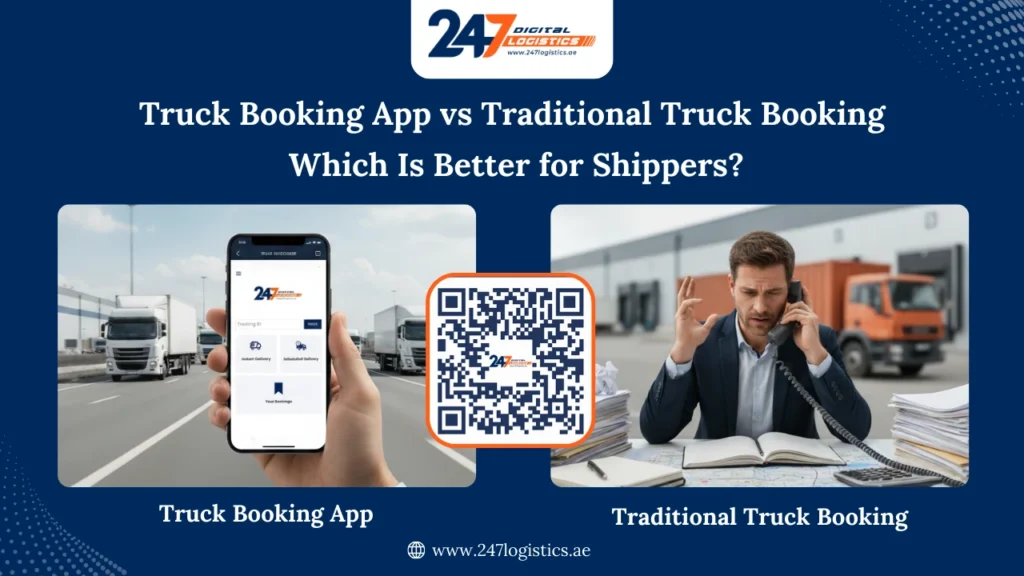
Traditionally, truck booking relied on phone calls, agents, and manual coordination. Today, the truck booking app offers a faster, more transparent alternative. This raises an important question for shippers: Truck booking app vs traditional truck booking— which is better?
Understanding Traditional Truck Booking
Traditional truck booking has been the backbone of logistics for decades. It typically involves:
Calling transporters or brokers
Negotiating rates manually
Confirming availability over phone or email
Limited tracking and documentation
While this approach worked in the past, it presents several challenges in today’s fast-paced logistics environment.
Limitations of Traditional Truck Booking
For modern shippers, traditional truck booking often results in:
Delayed confirmations
Lack of price transparency
Manual paperwork
Poor shipment visibility
These limitations can lead to inefficiencies, increased costs, and missed delivery timelines.
Truck Booking App vs Traditional Truck Booking: Key Differences
1. Booking Speed and Convenience
- Traditional Truck Booking
Booking trucks manually can take hours or even days. Shippers must contact multiple transporters, wait for confirmations, and follow up repeatedly. - Truck Booking App
A truck booking app enables instant bookings. Shippers can find available trucks, compare prices, and confirm transportation within minutes.
2. Pricing Transparency
- Traditional Truck Booking
Pricing is often negotiated and varies based on relationships, availability, and market demand. Hidden costs may appear later. - Truck Booking App
A truck booking app provides upfront pricing with clear cost breakdowns. Shippers know exactly what they are paying before confirming.
3. Real-Time Tracking and Visibility
- Traditional Truck Booking
Shipment tracking usually depends on phone updates from drivers or agents, leading to uncertainty. - Truck Booking App
With built-in GPS, a truck booking app offers real-time tracking, estimated delivery times, and live shipment updates.
4. Documentation and Record Management
- Traditional Truck Booking
Paper invoices, manual receipts, and physical documentation increase administrative workload. - Truck Booking App
A modern truck booking app provides digital invoices, booking records, and payment history, simplifying documentation.
5. Reliability and Trust
- Traditional Truck Booking
Reliability depends heavily on personal relationships and past experiences. - Truck Booking App
Most truck booking apps include driver verification, vehicle documentation checks, and rating systems, increasing trust and accountability.
Cost Efficiency: Which Is Better for Shippers?
From a cost perspective, a truck booking app offers clear advantages:
Reduced administrative effort
Optimized routes
Competitive pricing
Traditional truck booking may seem flexible but often results in inconsistent pricing and higher long-term costs.
For shippers aiming to control logistics budgets, a truck booking app is more cost-efficient.
Scalability for Growing Shipping Needs
- Traditional Truck Booking
Scaling operations requires more phone calls, more agents, and more manual coordination.
- Truck Booking App
A truck booking app supports bulk bookings, multiple shipments, and inter-city logistics with minimal effort.
This scalability is crucial for businesses experiencing growth in shipment volume.
Technology Advantage of Truck Booking Apps
Modern truck booking apps are powered by advanced technologies such as:
GPS and real-time tracking
AI-based route optimization
Cloud-based logistics management
Data analytics for performance insights
These technologies provide shippers with greater control and visibility compared to traditional methods.
When Traditional Truck Booking Still Works
Despite its limitations, traditional truck booking may still suit:
Very small or occasional shipments
Long-term transporter relationships
Remote areas with limited digital access
However, even in these cases, a truck booking app offers greater efficiency when available.
Which Is Better for Shippers?
For most modern shippers, the truck booking app clearly outperforms traditional truck booking. It offers:
Faster bookings
Better cost control
Improved shipment visibility
Scalable logistics solutions
As Google’s 2025 algorithm prioritizes helpful, experience-driven content, it’s clear that digital-first logistics solutions are the future.
Conclusion
When comparing truck booking app vs traditional truck booking, the choice is clear for most shippers. A truck booking app delivers speed, transparency, reliability, and scalability—key factors in today’s logistics landscape.
While traditional methods still exist, the future of shipping belongs to digital platforms that simplify and optimize freight transport.